
RUSA Report March 12: 2026 general election timeline announced, changes to funding guidelines presented
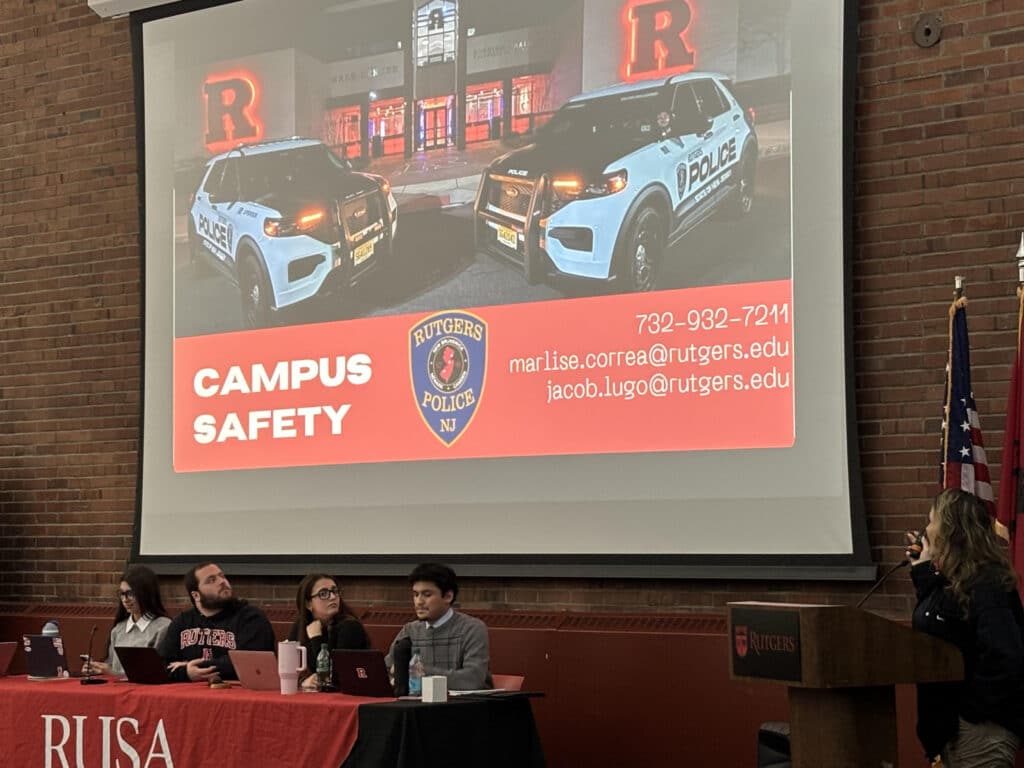
Photo: Noah Choi
The student assembly announced the voting period for RUSA’s 2026 general election and heard a bill to change RUSA’s student organization funding guidelines.
RUSA also passed standing rule changes regarding the election process and heard a presentation by a RUPD community officer on campus safety.
2026 RUSA general election voting period announced
The voting period for RUSA’s 2026 general election will be from March 26 to 30, as declared by the temporary regulation from the assembly’s election committee.
The period was initially set between March 29 and April 2, but was moved back in consideration of Jewish students unable to vote due to religious restrictions during Passover.
During the meeting, School of Engineering representative Kelly Shapiro asked the election committee to extend the voting period using powers granted by a bill passed during the same meeting to allow Jewish students a larger window to vote. While assembly members do not have the power to amend regulations set by committees, the election committee agreed to change the voting period in accordance with Shapiro’s request.
With the shift in voting period, the campaigning period has already begun, leading to multiple candidates announcing their campaigns.
During time for public comment, Alejandra Afanador, an SAS senator, announced her candidacy for student body president under the campaign Knights for Change.
University Affairs Chair Alina Chen, also announced her candidacy for student body president, under her campaign Uknighted Rutgers.
Aarya Patil, off-campus representative, announced her candidacy for SAS Senator.
The regulation also sets March 24 as the last day for candidates to announce their bids.
Student organization funding guidelines changes presented
The student organization funding bill was presented by RUSA President Christopher Godoy and allocations board chair Anisha Saple. primarily aims to remove unenforced rules, make language in the standing rule more clear and modernize the guidelines to fit current practices.
The bill would also make it easier for student organizations to share funds for collaborative events, add requirements for organization officers and create an auditing system within RUSA to randomly select organizations to ensure funding is spent properly. The audit system would be separate from the existing audit system in the University’s Student Activities Business Office.
The bill would also overturn a long-held rule that RUSA guidelines do not apply to organizations funded by the governing councils of professional schools. While governing councils administer funding to some student organizations, all student organizations get their funding from the RUSA-controlled student fee.
The bill also asks the governing council to make thorough budgets for their spending each semester.
Mason Gross representative Kai Cleary passed an amendment that inserts governing councils into the process of organization funding. With the amendment, the standing rules state that student organizations funded by governing councils receive funding directly from those governing councils.
Cleary’s amendment does not make organizations funded by governing councils exempt from RUSA guidelines, and RUSA would still have final say to any changes in funding. However, the distribution of funds and any changes to funding would be executed by the governing councils, not RUSA.
Cleary argued that without this procedure, RUSA auditors may be stretched thin and unable to foster the close relationship the councils currently maintain. In response, Godoy said that RUSA was capable of handling the added responsibility.
Cleary also argued that governing councils have greater understanding of the organizations they fund, which gives unique perspectives that would be lost under the bill’s new system. Godoy responded that he welcomed opportunities for RUSA to learn more about the needs of student organizations by funding them directly.
While governing council members can not vote on legislation, members of the Mason Gross Student Governing Association voiced their support for Cleary’s amendment.
Samrine Shoha, class of 2028 representative, agreed with Godoy, stating that the amendment would turn governing councils into an unnecessary middle man and creates possible inequities in how student organizations are overseen.
Mason Gross SGA representative Clark Mitchell said he worried about the bill’s implications for the role of governing councils in Rutgers student government. Mitchell said the bill would diminish their impact on student activities and their involvement would be forgotten.
Another amendment setting the capping the overhead funds of provisional clubs to $200 was also passed. As originally presented, newly recognized student organizations would have a maximum budget of $50 per semester during their provisional term.
Despite the amendment increasing the budget cap, the maximum budget for provisional organizations would still be lowered, as the bill also eliminates a $450 budget cap for events. According to University rules, provisional organizations can not hold events, so those funds currently go unspent.
Both amendments were passed by a majority vote.
The standing rules changes to the RUSA funding guidelines will be voted on at a meeting on March 27.
Bill to change election process passed
The assembly passed a bill to codify election rules and widen candidate eligibility.
The bill also changes the standing rules to standardize voting windows of elections also requires members of the election committee to sign non-disclosure agreements to keep sensitive election information private
The bill was passed as presented and amended at a meeting last week, including amendments presented by Shapiro to avoid complications between the voting period and the Jewish period.
With the amendments, the bill requires the election committee to consider religious holidays when setting voting periods and grants the committee the ability to extend voting periods if needed to ensure all students have adequate time to vote. This comes after Parliamentarian Vinya Lingamneni raised concerns about these changes when the bill was presented last week.
The bill was passed with unanimous consent.
RUPD campus safety presentation
Marlise Correa of the RUPD’s Community Policing Department gave a presentation on campus safety. She highlighted multiple safety tips geared towards students, including theft and scam prevention.
She also emphasized resources offered by RUPD, including the Knight Mover, 24/7 security escorts and self-defense classes. All services are available to students free of charge.
Correa also addressed RUPD’s policy to not comply with immigration enforcement operations as the Trump administration deploys federal agents across the country. Correa also highlighted RICAP’s free legal consultations and emergency hotline for any student facing or witnessing detainment.
Other Meeting Updates
The voting period for the referendum to change the RUSA referendum closed Thursday. The results of the vote will be presented at a meeting March 27.
During officer updates, SAS Senate Leader Tony Pichardo spoke on his involvement with the resolution supporting academic departments amidst downsizing efforts by University Administration.
University Affairs Alina Chen also announced that the Rutgers Democracy Lab is collecting testimonies from students about housing insecurity and homelessness.
The assembly will not meet next week during spring break. The next RUSA meeting will be on March 27.
The full meeting minutes for the March 12 meeting can be found here.
Story by Noah Choi and Andrew Hawthorne