
Rutgers 9/11 remembrance ceremony highlights first responders, lasting health impacts 25 years later

The ROTC Color Guard presents the colors. (Photo credit: Luca Mostello/Rutgers University)
The Rutgers University World Trade Center Health Program Clinical Center of Excellence commemorated the 25th anniversary of the September 11 attacks. The Friday morning ceremony at the Rodkin Academic Success Center honored first responders and those affected by the attacks.
The event opened with bagpipes and featured speeches from people who recalled their experiences on 9/11, including some who were at Ground Zero. Other speakers included doctors who have treated first responders and survivors experiencing long-term health conditions linked to exposure to asbestos and other toxic substances in midtown Manhattan after the attacks.

The first keynote speaker was Assistant Chief Kevin Fowler of the Port Authority of New York and New Jersey Police Department’s Aviation Branch, who recounted his experience on 9/11 and its lasting impact on his career.
“The events of 9/11 shaped me. They shaped my career, my perspective, and the relationships I have built with so many people who responded and worked on the recovery of the World Trade Center,” Fowler noted.
The second keynote speaker was Brian Kelly, who represented the International Union of Operating Engineers Local 15 in New York City. Kelly advocated for the tradesmen who worked at Ground Zero and discussed the continuing health problems affecting those who were exposed.
“Here we are twenty-five years later — we’re still getting sick. Seventy-five percent [of us tradesmen] in the last two years have cancer, anybody who was exposed down at Ground Zero, are getting sick,” Kelly emphasized.
Rutgers Environmental and Occupational Health Sciences Institute Medical Director Iris Udasin spoke about the ongoing health effects of the toxic conditions around Ground Zero. Later in the ceremony, Udasin received an award from the Daughters of the American Revolution for her role in advancing health research into illnesses related to exposure at Ground Zero.
“The work we’ve done at the clinic, we’ve done the best we can to see you at points where we can either prevent disease or find it before it gets bad. We do the best to heal you ourselves, and if we can’t heal you, we find someone else who does know how to heal. And if we can’t heal you, at least we get you the right benefits,” Udasin addressed the crowd of first responders and New Yorkers.
About 9,400 people have died from 9/11-related illnesses, while about 50,000 people live with 9/11-related cancer diagnoses, according to recent data from the WTC Health Program.
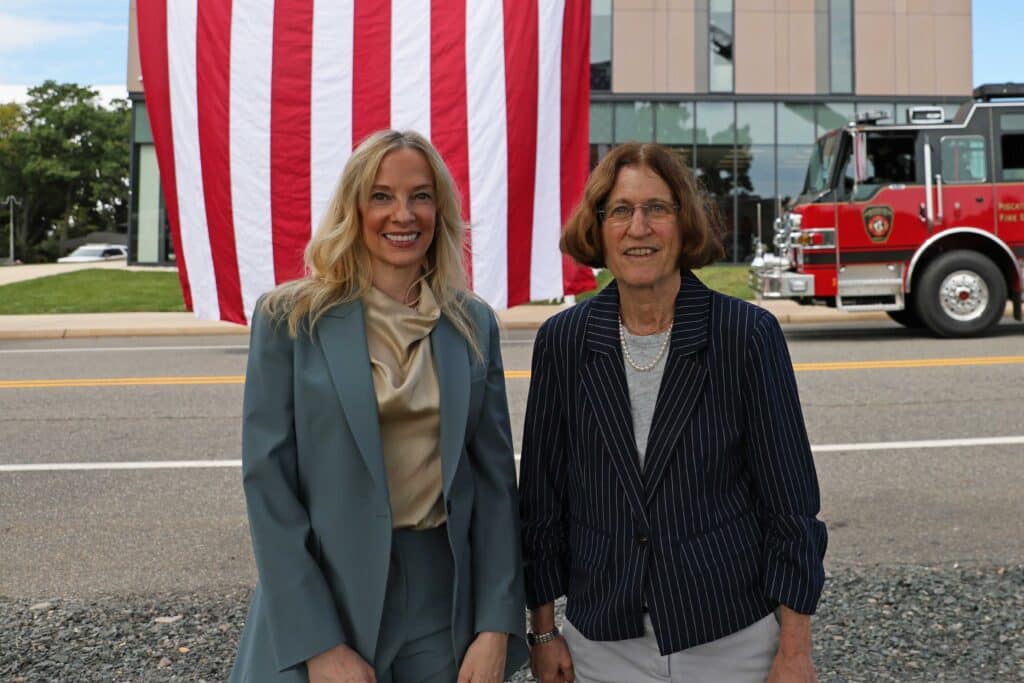
Rutgers WTC Health Program Mental Health Director Jodi Streich also addressed the audience about her experiences as a clinical psychologist specializing in treating anxiety, depression and post-traumatic stress disorder in 9/11 first responders.
“I find all of you to be quite extraordinary. Because even when you come to see us for care, you’re still providing care. I see it in how you show up each day for one another, and how you show up for our own staff, in small gestures, asking for nothing in return, with a protectiveness I think you don’t even realize you carry. None of you stopped serving simply because the uniform came off. That instinct to show up for someone in need never leaves,” she said.
Udasin and Streich later spoke with WRSU about some of the most common physical and psychological health issues survivors face.
“Starting right after 9/11, it was mainly respiratory, gastrointestinal-type conditions, but as we got further along, chronic illnesses developed, chronic lung problems, and unfortunately cancer,” Dr. Udasin noted regarding the physical health concerns.
Dr. Streich addresses the mental toll of the matter, saying, “Why now? Why twenty-five years later? There’s no real timetable for trauma, PTSD, even depression, anxiety, and other things we are starting to see.”
The event concluded with the traditional bell tolling, rifle salute and the playing of “Taps.”
Maryam Malihi contributed to this report.