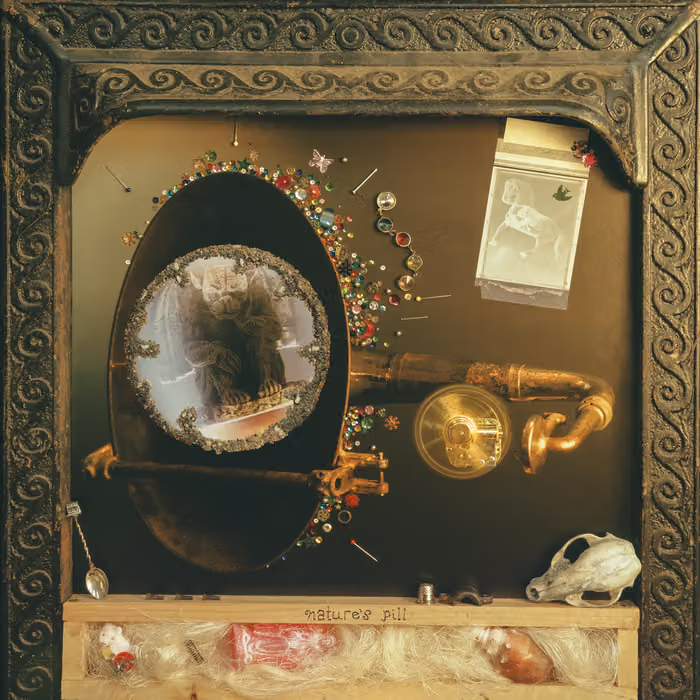
Wishy Embrace the Limitations on Nature’s Pill: Feature Interview
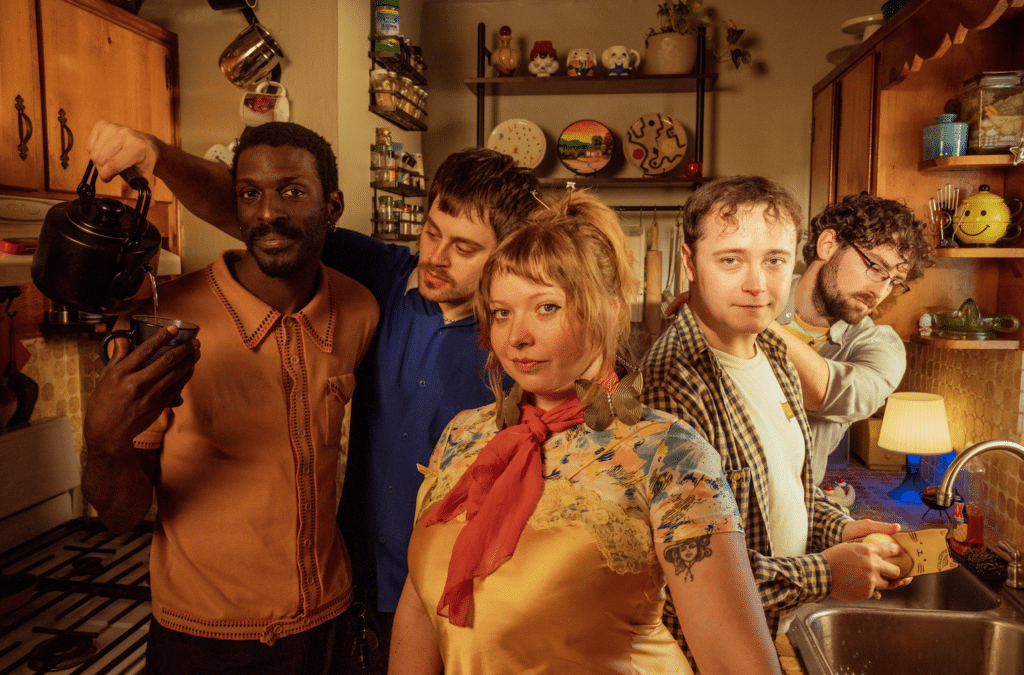
Wishy by Rian Archer
Wishy recorded their new album in a crammed Los Angeles apartment; the immediacy churned out 12 college radio bangers.
When the CD for Wishy’s new record, Nature’s Pill, arrived at WRSU, the opening track “All The Rage” was blaring from our janky Panasonic boombox before anyone in the studio was informed of what was playing. Two records and a few EPs in, they’re the type of band you don’t need to introduce. The Indianapolis quintet established their presence on 88.7 FM’s airwaves with Triple Seven, and their sophomore follow-up further indicates an ear for the sound our DJs demand.
On the surface, Nature’s Pill is a reflection of the ‘90s and ‘00s indie rock Wishy grew up listening to; however, its strength lies in their process. The power in Wishy’s return emerges from fully investing in their unfamiliar and contained surroundings. Recording at co-producer Ben Lumsdaine’s bedroom studio in LA forced the band’s leads, Kevin Krauter and Nina Pitchkites, to reimagine their collaboration. At various moments, the vulnerability of writing as a team bursts amidst sudsy melodies and wistful riffs.
The intimacy of the Los Angeles sessions was a direct reflection of their live show. Last month, Wishy wrapped up the first leg of their tour at the end of October, which began with their own festival, Wishy Fest. During the first break from the road after releasing Nature’s Pill, I spoke with Krauter about writing new music with Pitchkites, recent inspirations, and their undeniable college radio energy.
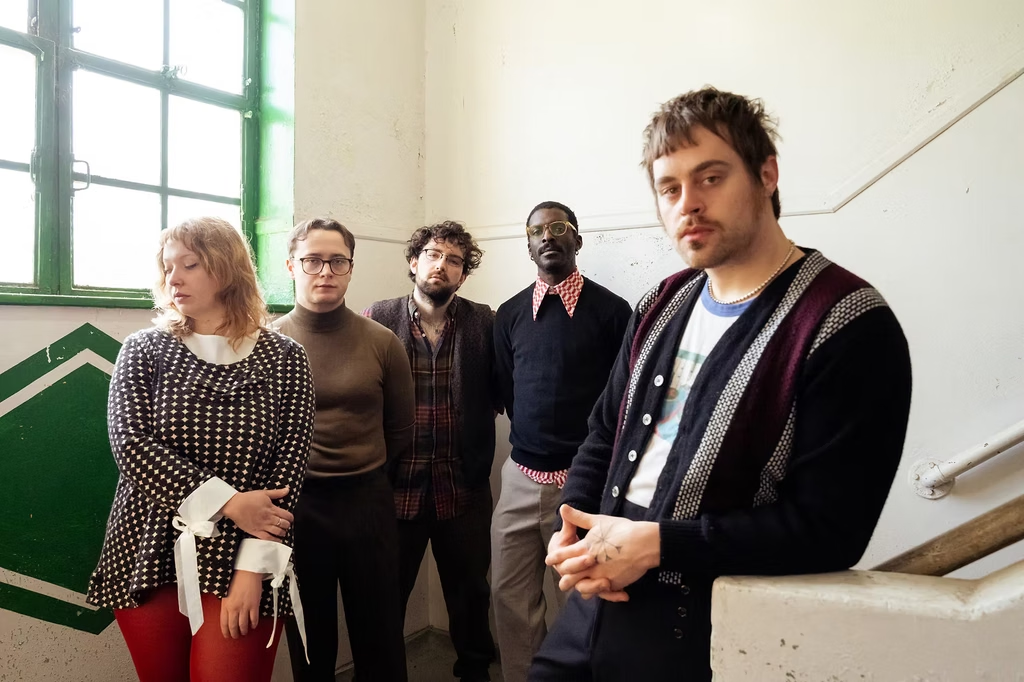
Sam: You just wrapped up a month-long tour, which started shortly after Nature’s Pill was released. How did it feel to be performing with a much larger bank of songs to choose from?
Kevin: It feels good, but it’s interesting because it should feel like we have a lot to work with, and we do, but I think we get so fixated on playing the new stuff that we kind of forget about all the older songs that we could play. When we have new music, released or unreleased, we just get bored with a lot of the songs we have already played live. We’re not getting asked to play two-hour shows, so we have to condense. We have to figure out what to do with all these old songs. Do we go with the hits, or should we do some deep cuts?
When you’re writing a new album, how much do you keep the live show in mind in terms of how the songs will work with the old stuff?
I try not to worry about how the new songs will work continuity-wise. Pretty much any time I write a song for Wishy, I’m thinking about how it would feel to play live. Although for a lot of this album, I was in a producer mindset and was thinking of the recording first. But the live thing is always part of the equation in my sort of rock star fantasy section of my head that’s been there since I was a kid. I know that’ll never go away, and it kind of informs everything I do in a small way, so it’s a bit of both.
You recorded the album in a very small space. How did that influence the recording and production?
I really love recording in a small space with limited resources because that’s always been the case anytime I’ve made music on my own. I would use GarageBand and whatever microphone is sitting around. Even if I don’t have a microphone, I’d use the built-in laptop microphone or phone mic or an AirPod mic. Working in those limitations can be really fun. It makes a puzzle out of creating something, and then what you create can have this sort of energy to it.
Sometimes working in a nice studio with everything very nicely set up can feel kind of flat. But working in parameters has always yielded more exciting results for me. Every time we’ve made music in Ben Lumsdaine’s home studio, it’s just had an excitement, like, ‘I’m in my friend’s house, and we’re cooking up a track.’ I’m way more comfortable and excited than when I’m in a nice big fancy studio.
Given the small space, was it easier to play around more while recording because it’s almost like a mirror of the live show?
Yeah, I think so. When you’re in one room, and all the equipment is in that same room, it’s just like grab the thing, plug it in, and chase the idea. You don’t have this separation of, like, “Well, whatever we want to add, we have to be really intentional about it.” It’s just a different mode of recording, and it’s fun to have that immediacy and access to whatever random little toys, like keyboards and weird percussive things. Ben has a sick collection of weird percussion toys, keyboards, weird guitar pedals, and old microphones, and getting to just play around with all of his stuff whenever you want to, without feeling like there’s a literal physical barrier between where you want to record it and where you can track it.
When I write in a place that isn’t home, I definitely feel a different energy than when I’m working on a piece at home. How did recording in a place that wasn’t home affect the writing and recording process?
I mean, a lot of it was written before we went in, but a lot of it wasn’t. And I think there’s something about being in LA that is really creatively inspiring. It’s exciting to be recording somewhere other than home, and it almost feels like the stakes are a little higher, but at the same time, they are a little lower. Like you’re somewhere new; it doesn’t have all the same history. It’s hard to describe or pin down why it feels so different, but I totally agree with you. Last time I was out in LA, I was by myself hanging out with some friends, and we got together in the studio and wrote this song in, like, a day. And that’s something that rarely happens here in Indiana. It’s like a fun feeling. I feel like that’s something I experience a lot when I go out there.
You collaborated more closely with Nina on this record. How did it feel to work as a duo?
It’s really fun. Nina and I have known each other for so long; we kind of have this brother-sister relationship, and sometimes, like with a sibling, you can forget how much you fuck with each other. We have our own little friendship outside of this business partnership. On this album, we tried to sort of intentionally tap into that when we were like sitting down and writing together, and just being like, “All right, let’s write this freaking song.” And the vibe was like, let’s not be shy about it because historically we’re both kind of solitary when we write, and it’s a vulnerable thing. Even though we’re homies and have made music together for a while, it still feels like a vulnerable thing to let someone else step into your little private space where you write.
The album is filled with college radio-esque bangers. Is that type of sound something you keep in mind while recording?
Honestly, yeah, that is really where my head was at with this project. I want to play fun, good-sounding songs you can sing along to. If you focus on the music a little more, there’s more under the surface, but at the end of the day, I feel like Nina and I are just so pop-oriented. We just love music that is loved by lots of people and the weird science behind a pop melody. I think that’s something that we both kind of chase, and yeah, we love that college rock sound.
What were the albums that inspired you while writing and recording Nature’s Pill?
I get asked this question, and my mind goes so blank. And then, weeks later, I’ll be thinking about something that was so influential to the album, so I’m gonna do my best, but it’s truly so hard for me to answer this question adequately sometimes. But one I will say is the Broken Social Scene’s You Forgot It in People. That was a major production reference point with the sort of medium-fidelity vibe of that album and the sort of rambunctious yet controlled nature of the landscape. Ben and I were both obsessed with that in high school and college.
Vibe-wise, you know, like music-wise, I was really into The Breeders over the past couple of years. With The Breeders and Pixies, and that side of college rock, indie rock, there’s so much to tap into there, and so much that I love to hear. There are rambunctious elements in their music, and then they’ll just fall into moments that are so sweet and rewarding. I think something about Kim and Kelly Deal being from Ohio gives it this Midwest weirdness and kinship, which was a big vibe inspiration.
Speaking of the Midwest, what’s the Indy scene like right now?
It’s kind of always in flux because it’s such a small place. So, one band breaking up or one band moving away can really switch things up, and things just sort of shift a lot. I mean, that happens everywhere, I’m sure. But you can really feel the effects here. But there are great bands going on. One band is God’s Green Earth, which includes some of our friends. Our friends’ band, Living Dream, is incredible. They sort of sound a little like Brian Jonestown Massacre, but with a family-band style.
There’s a tape label here called Medium Sound. It’s run by Mark Tester and Lyndon Caldwell. Mark owns this venue called State Street Pub, and that’s sort of the home of the Indianapolis scene. He’s a deep OG who’s been literally holding the scene on his back for years now. I have to shout them out. Medium Sound is a huge bedrock of the Indianapolis scene.
Wishy’s new album Nature’s Pill is available now via Winspear.